

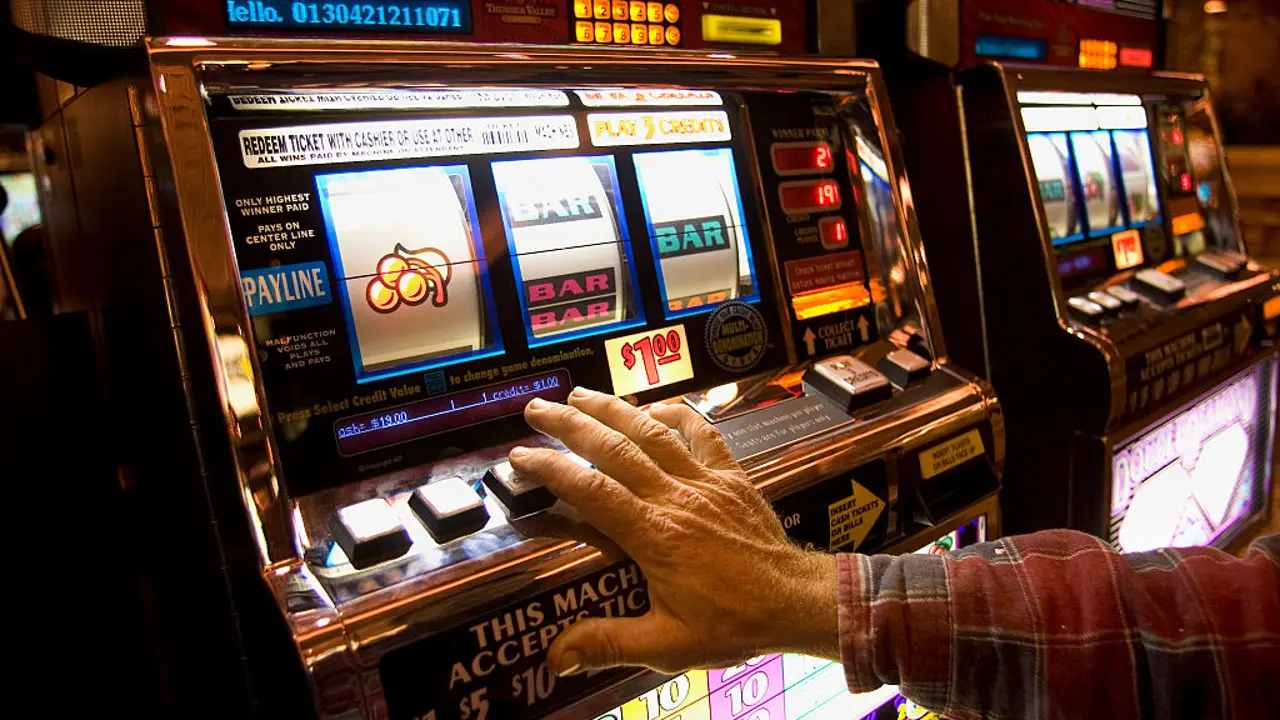
There is a distinct, sinking feeling that hits right in the pit of your stomach when you are sitting in front of a slot machine—or scrolling on your phone—and the reels just refuse to cooperate. One spin after another turns up empty. Your budget is draining, frustration is rising, and you feel completely stuck in a downward spiral.
Losing streaks are an inevitable part of gambling, but when you hit a wall of consecutive losses, your next few moves are critical. Do you try to win it back, or do you step away? Here is a psychological and practical roadmap on exactly what to do when casino slots just aren’t hitting.
1. Understand the “Near-Miss” Mirage
First, it helps to understand why your brain is screaming at you to keep pressing the button. Slot machines are masterfully engineered using what psychologists call variable ratio reinforcement schedules. Because the payouts are completely unpredictable, your brain releases a massive surge of dopamine right before the reels stop. The anticipation itself becomes the reward.
Even worse is the near-miss effect. When you see two bonus symbols line up and the third sits just one notch out of place, your brain doesn’t process that outcome as a loss. Instead, neuroimaging shows that your reward center lights up at 75% to 90% of the intensity of an actual jackpot.
The Reality Check: A near-miss is mathematically identical to a total miss. The machine isn’t “due” for a payout, and you aren’t “almost there”. Every single spin is a completely independent, randomized event governed by software.
2. Fight the Urge to “Chase”
When loss aversion kicks in, humans naturally feel the sting of a loss about twice as intensely as the joy of an equivalent win. This creates an overwhelming, irrational emotional drive to “get back to even”. You might think, “If I just double my bet size, one good bonus round will fix all of this.”
This is called chasing your losses, and it is the single most dangerous trap in a casino.
- Chasing completely discards statistical odds.
- It causes you to blow past your financial boundaries in minutes.
- It converts an evening of entertainment into a highly stressful financial liability.
Accept the loss the moment it happens. Consider that money the “cost of admission” for the entertainment, and recognize that trying to force the math to break in your favor will only result in a steeper deficit.
3. Implement the Immediate Circuit Breakers
If you are currently in the middle of a bad run, you need to disrupt the behavioral loop immediately. Use these three tactical circuit breakers to protect your bankroll:
The “Walk Away” Reset
Physically remove yourself from the gaming environment. If you are at a physical casino, stand up, leave the gaming floor, and go get a glass of water or food. If you are playing online, close the tab or lock your phone. Creating physical distance gives your brain’s high-stress response time to cool down, allowing your prefrontal cortex—your rational decision-making center—to regain control.
Practice “Urge Surfing”
When you feel the intense compulsion to spin one more time, practice mindfulness. Acknowledge the frustration and the craving to play without immediately acting on it. Remind yourself that the urge is a temporary wave of adrenaline that will naturally peak and subside within a few minutes if you simply wait it out.
Use Account Guardrails
If you play slots online, do not rely entirely on willpower when emotions are running high. Navigate to your account settings immediately and activate built-in responsible gambling tools:
- Set a Loss Limit: Cap the maximum amount you can lose daily or weekly.
- Set a Session Timer: Force the software to log you out after a set timeframe.
- Cooling-Off Period: Ban yourself from logging back into the platform for 24 to 72 hours to force a hard reset.
4. Re-Evaluate Your Boundaries
Once you are away from the flashing lights and your head is clear, it is time to perform an honest assessment of your session.
Ask yourself why you were playing. Were you playing purely for fun with money you could completely afford to lose, or were you using the slots to escape stress, boredom, or financial anxiety? Using gambling as an emotional band-aid almost always leads to overspending and risk-seeking behavior.
Going forward, write down strict, non-negotiable financial limits before you ever log in or sit down at a machine. Keep a session log to track exactly how much you are spending over time. If sticking to these self-imposed boundaries feels increasingly difficult or causes intense anxiety, it may be a sign to take a more extended break from gambling altogether.
The Bottom Line
A long losing streak on the slots isn’t a sign that a big win is just around the corner, nor is it a personal failure. It is simply the cold, unyielding reality of mathematical variance.
The truest sign of a smart player isn’t knowing how to win—it’s knowing exactly how to handle a loss. When the fun stops and the losses mount, the most powerful move you can make is to take your hands off the controls, close the game, and walk away on your own terms.

Matthew Reed creates content focused on crypto casinos, betting platforms, and user-focused gambling guides.